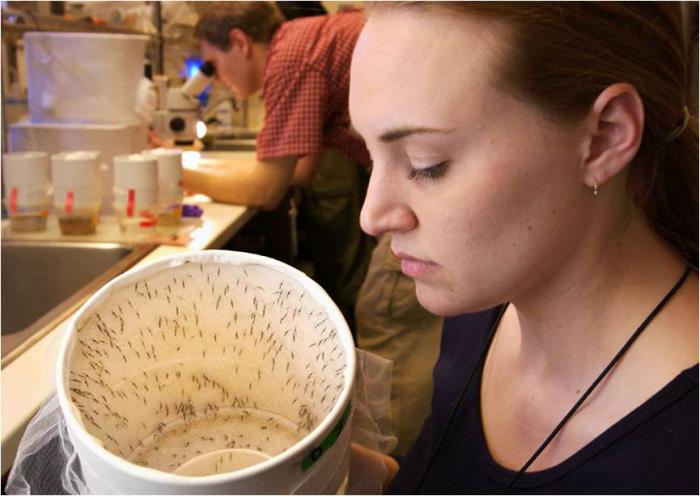
This
image depicts laboratory technician, Elizabeth Wilkins, as she was looking into
a sealed cylindrical cardboard container that held a large number of mosquitoes
scheduled to undergo testing in this laboratory environment. The container was covered by a thin netting,
and the mosquitoes inside had all lighted on its interior surface, desiring to
escape in order to obtain their requisite meal of
blood.
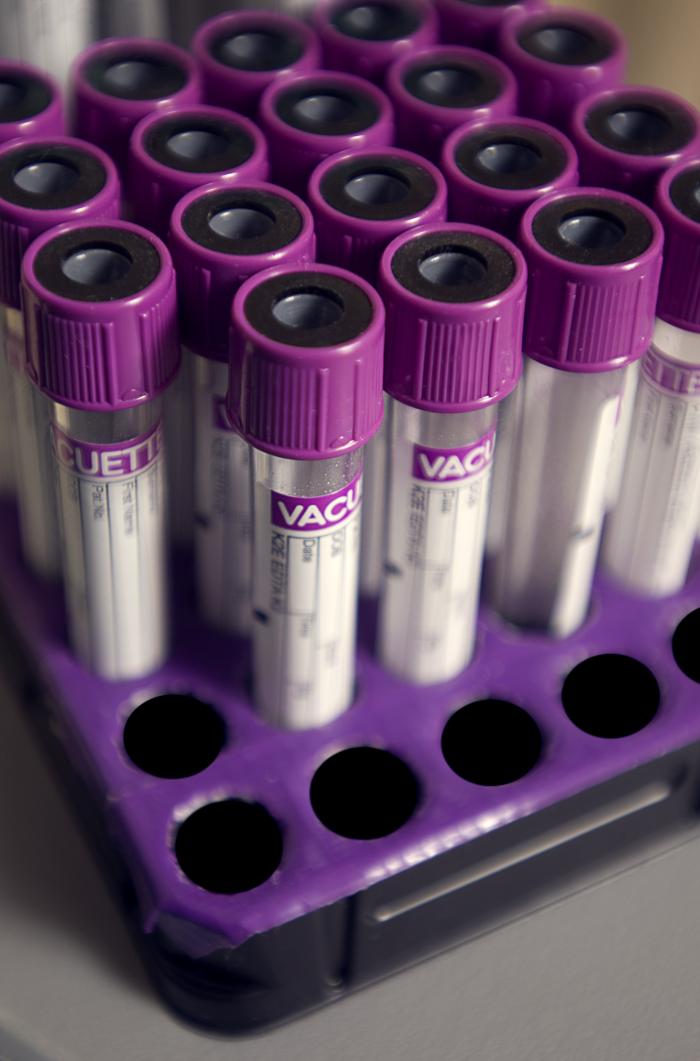
Here
we see a test tube tray containing a number of purple-tipped vacutainer
blood-collection tubes. Purple-topped
vacutainer blood collection tubes contain the anticoagulant EDTA, which prevents
the collected blood from clotting. The contents of purple-topped tubes is
generally used when running blood analysis tests including blood counts,
hemoglobin, platelet count, etc.
During
this young boy's day out to the lake with his toys, he was pictured here bent
over picking up one of his play-pieces from the wet sand. Given his
sun-exposure, sunscreen had been applied to his skin in order to prevent
overexposure to the sun's harmful ultraviolet rays. However, he would have been further protected
if he'd been wearing a darkly-colored shirt, as in the case with the child
depicted in PHIL 14038 through 14042.
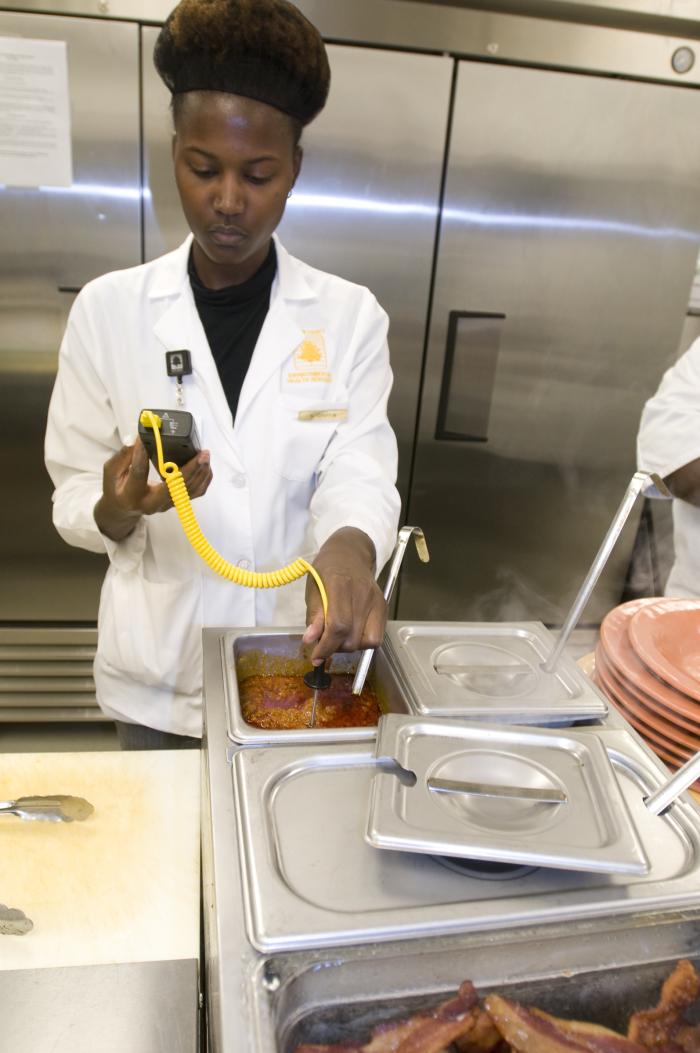
The
state-appointed public health inspector pictured here, was checking the sanitary
conditions inside a kitchen. At this point in her inspection, was taking a
reading of a food's temperature by using a thermal probe, which provides an
interior temperature that must be found to be within safe-range
limits.

 0017713
 0013536
 0014043
 0013516
 0013841
No comments:
Post a Comment